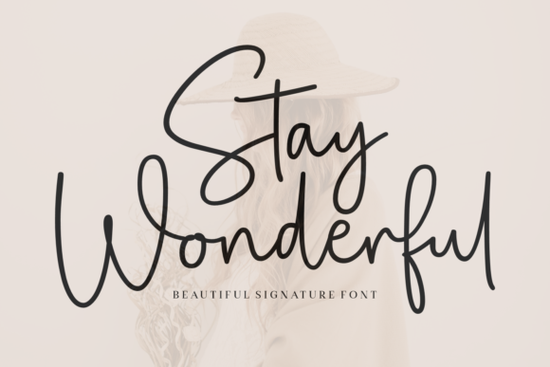
If you are looking for a script that feels both light and intentional, the Stay Wonderful Font delivers exactly that. Designed with thin strokes and cleanly rounded letterforms, this typeface avoids the heavy weight of typical handwriting fonts while still carrying a personal touch. You will notice how the spacing allows each character to breathe, making long quotes or short labels easy to read on social posts, packaging, or wedding stationery. The design skips unnecessary flourishes, which keeps your layout clean and lets your imagery take center stage.
Why does a delicate script like this work so well for small businesses and craft sellers?
Because versatility matters more than decoration. When you run a print-on-demand store or sell handmade goods online, you need typography that adapts quickly to different products. A thin handwritten style pairs nicely with minimalist illustrations, watercolor backgrounds, or solid-color apparel. You can stretch it slightly for custom headbands, keep it tight for business cards, and watch how the consistent thickness prevents muddying when files are scaled down for embroidery or vinyl cutting. Since the strokes remain uniform, scaling the text rarely breaks the visual rhythm, which saves hours of manual retouching during batch production runs.
How do creators actually place this style in their workflow?
Most users drop it into standard design software to handle text-heavy layouts that need a gentle hand. Instead of treating it as an accent only, try letting it carry the primary message on quote graphics, festival posters, or event flyers. Pair it with a sturdy sans-serif for body copy so readers never struggle with legibility. You will also find it helpful for labeling glass jars, creating gift tags, or drafting menu boards where a casual but tidy appearance fits perfectly. When working with sublimation or direct-to-garment printing, keeping line height relaxed prevents ink from bleeding into neighboring characters, preserving that crisp feel. Adding subtle drop shadows often enhances readability against busy patterns without hiding the original pen-like quality.
Where should you look if you want to explore similar thin or rounded scripts?
The market holds plenty of options that complement this particular weight, and mixing styles intentionally often yields better results. For example, browsing a collection focused on romantic lettering can give you contrast when you need tighter curves for dates or names. If your project leans toward modern minimalism, checking out alternatives found at paired script resources helps you build cohesive sets. Many sellers also keep a library of classic styles nearby, such as pieces discovered through retro-inspired libraries or tropical-themed options linked via island-style typefaces. Keeping these references handy saves time when clients ask for mood-specific variations. You can also test combinations by placing two scripts side by side, adjusting tracking until they sit comfortably. For additional reference on related type styles, you can view search results for Stay Wonderful to compare spacing samples across different project mockups.
What practical steps help you avoid common scripting mistakes?
Tracking and leading require careful adjustment, especially with thin strokes. Increase letter spacing by ten to twenty percent to prevent overlapping terminals, and adjust line height so descenders never clip into the next row. Always convert outlines after final positioning if you plan to send files to commercial printers, and verify licensing covers your intended production method. Testing at actual print size catches alignment issues early, saving you from costly reprints. Additionally, running a quick contrast check ensures dark text reads clearly on busy backgrounds or light fabric. Keep a dedicated folder for frequently used spacing presets, measure kerning pairs manually when scaling below one inch, and archive old drafts separately so your workspace stays organized for new client batches.
How does this type compare to heavier handwritten alternatives?
Heavier scripts demand less space between characters but can overwhelm subtle design elements. A lighter approach like this one requires slightly wider kerning but rewards you with cleaner negative space. You gain the option to layer multiple lines without visual noise, which works beautifully for stacked branding marks or layered typography layouts. When weighing your choices, consider the final medium: paper stock, transfer tape, or screen print each react differently to stroke width. Thinner cuts usually hold detail better on textured surfaces, while thicker variants provide stronger visual anchors on glossy materials. Match the physical properties of your output device to the stroke thickness, and your final proof will align closely with the digital preview.
Before you begin your next layout, run through a quick verification routine.
- Scale your text to eight pixels, five inches, or your actual production size to confirm readability.
- Check that all ligatures activate smoothly and backup shapes exist in case a system lacks certain glyphs.
- Save a high-resolution PNG for web previews, export a vector PDF for manufacturing, and keep a master file editable in your preferred design program.
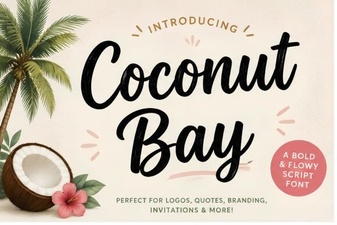 Creative Typography with Coconut Bay Font
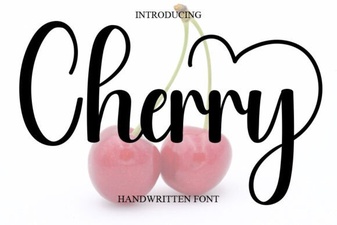 Introducing the Cherry Font for Modern Design Projects
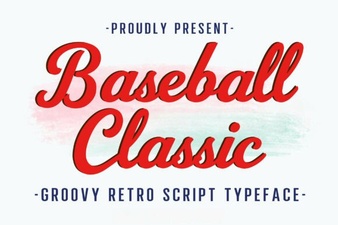 Baseball Font Design for Your Creative Sports Projects
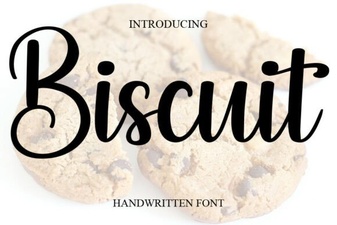 Biscuit Font: Creative Design Tips & Typography Ideas
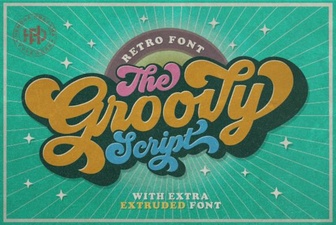 Groovy Font Styles for Modern Web Design
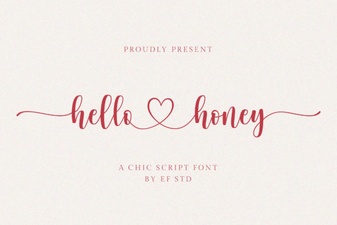 Hello Honey Font: Creative Design Ideas